Orbea’s Rise has always made a clear case for a more active kind of eMTB: a bike that adds useful assistance but still asks you to ride, choose your lines and put something into the pedals. For 2027, that idea remains at the centre of the bike, but the new generation brings a more powerful Shimano motor, a redesigned control system and two distinct versions: the trail-focused Rise SL and the more capable Rise LT.
The headline figures are a useful starting point, but they are not the whole story. Orbea’s aim is to make the Rise feel light and agile, then give the rider extra support when the climb gets steep or the trail turns technical. Based on the new platform and its specification, the 2027 Rise looks like a significant step forward in capability while keeping that rider-led character intact.
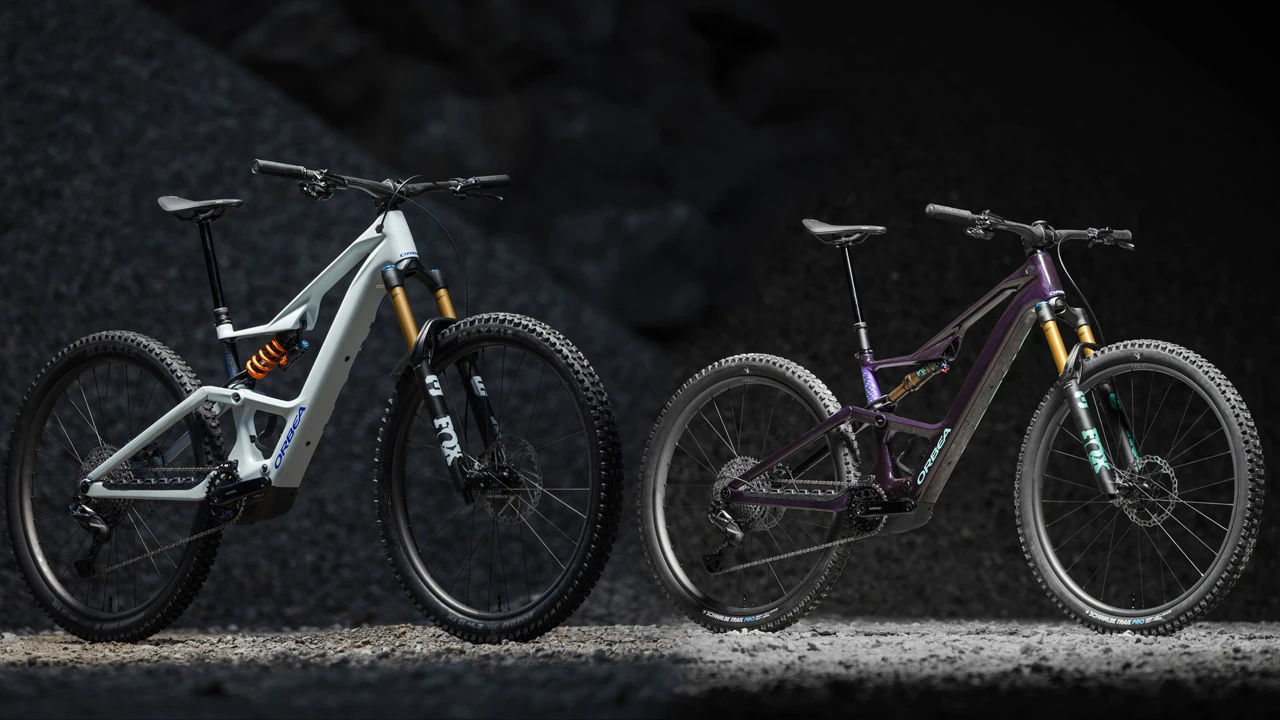
Two Rise models with different priorities
Rise SL: quicker and more efficient
The Rise SL uses 140mm of travel front and rear and is built around a 29-inch wheel platform. It is the option for riders who want a lighter, more efficient eMTB for long trail rides, fast laps and technical terrain where agility matters as much as outright impact absorption. Orbea quotes weights from around 17kg, depending on build and configuration.
That travel figure places the SL closer to a modern trail bike than a long-travel enduro machine. It should suit riders who want enough suspension for rough UK trails without making the bike feel like more than they need on everyday rides. The SL’s faster-trail kinematics are also intended to keep pedalling efficient and the bike composed when climbing.
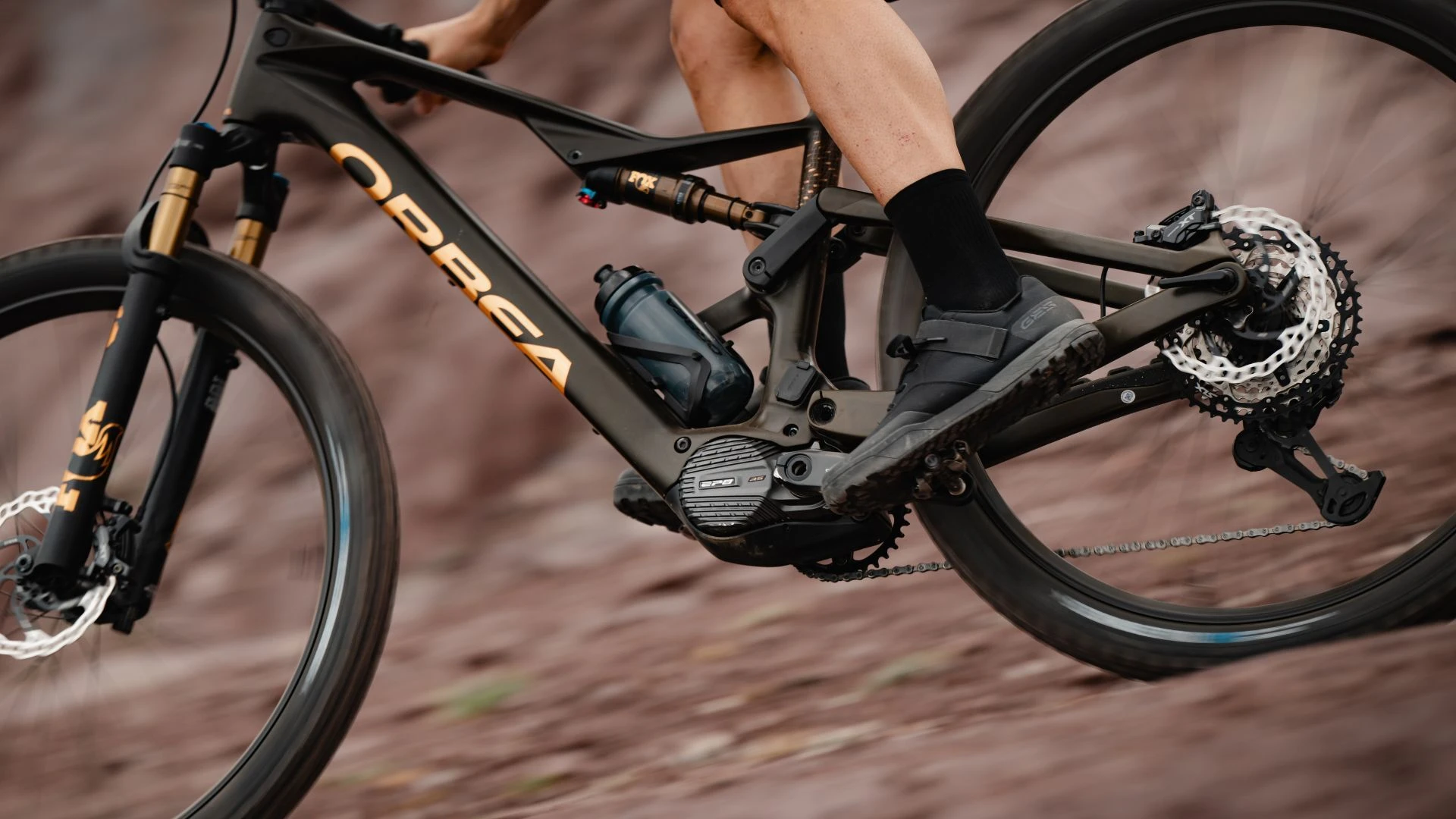
Rise LT: more travel and more room to push
The Rise LT increases travel to 160mm at the front and 150mm at the rear. It is aimed at riders who regularly choose steeper, rougher trails and want more support when the pace rises or the trail gets demanding. Orbea quotes weights from around 18kg for the LT, again depending on build.
The LT’s more progressive suspension is designed to give extra support deeper in the travel while still maintaining grip over smaller trail chatter. It is also mullet-ready, giving riders the option of a 29-inch front wheel with a 27.5-inch rear for a more playful feel. That makes the LT the more natural fit for riders who want to push into enduro-style trails, bike-park days and bigger features, while retaining the lighter feel that defines the Rise.
Both models use an OMR carbon frame. Orbea highlights size-specific stiffness and updated trail geometry, including a lower standover, a higher stack and longer chainstays. Those changes point towards a more confident and stable ride without losing the compact, responsive handling that riders look for in a lightweight eMTB.
A new Shimano EP810 motor, tuned for the Rise
The new Shimano EP810 motor is at the heart of the 2027 update. Orbea lists the motor at 2.3kg and develops its own RS tuning around it. The key change is not simply a bigger peak number: the RS tune is intended to manage assistance in response to how hard the rider is pedalling, saving energy when full support is not needed and responding more strongly when the trail demands it.
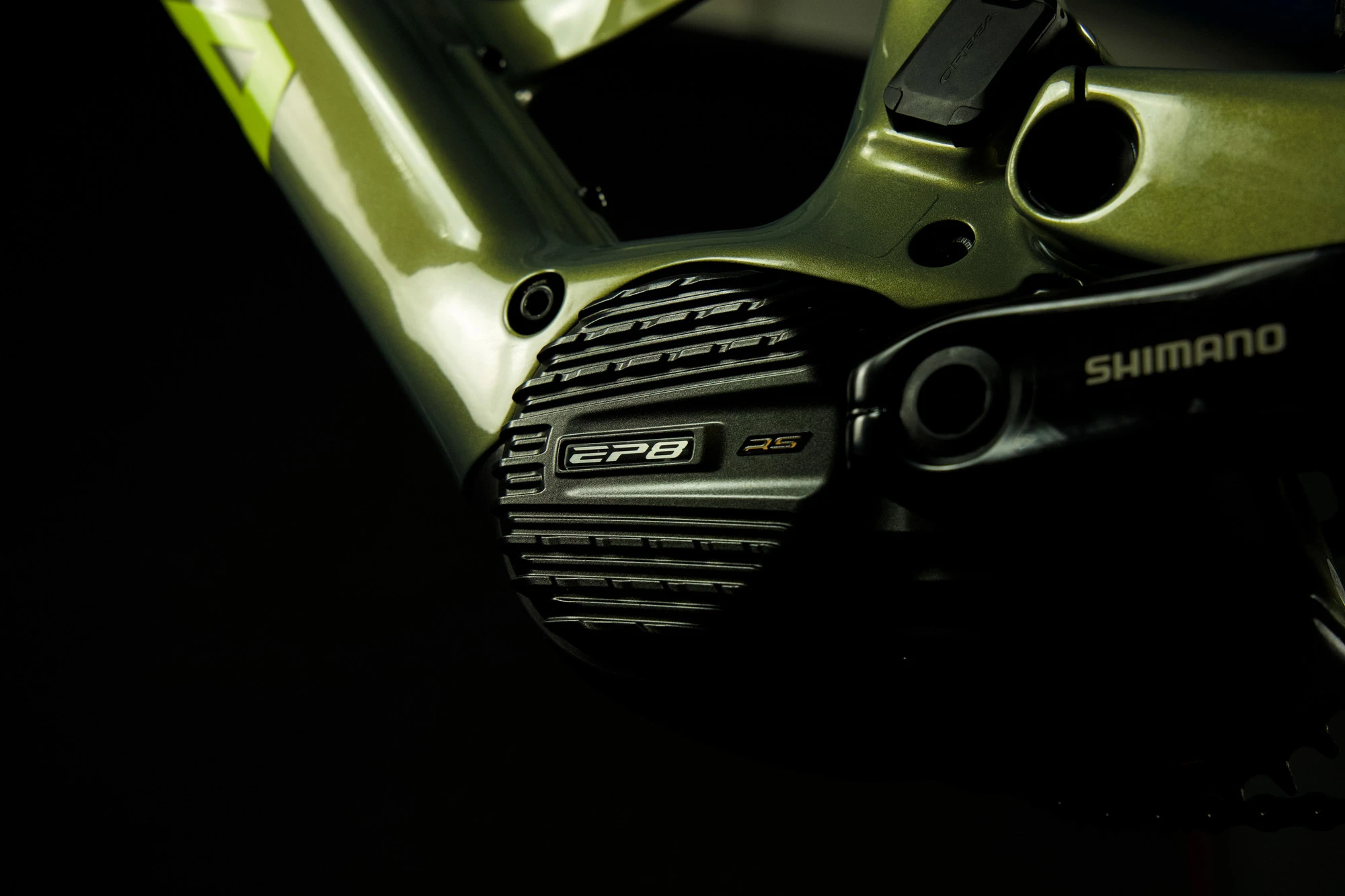
There are two main assistance profiles. RS is the more range-focused setting, delivering up to 85Nm and 400W. RS+ raises the ceiling to 100Nm and 600W for riders who want more help on steep, technical climbs. Orbea also describes a Super Boost option within RS that can access the higher output when required. In practice, the appeal will be having a calmer, more active setting for normal riding and a stronger reserve for the moments when extra support makes a difference.
That is a different approach from choosing a bike purely by its maximum torque. The Rise is intended to respond naturally to rider input, rather than making every ride feel like a sprint. The EP810’s lower stated weight and the RS tune should help preserve that balance, while the higher output gives the new bike more headroom than earlier Rise generations.
Battery choices and potential range
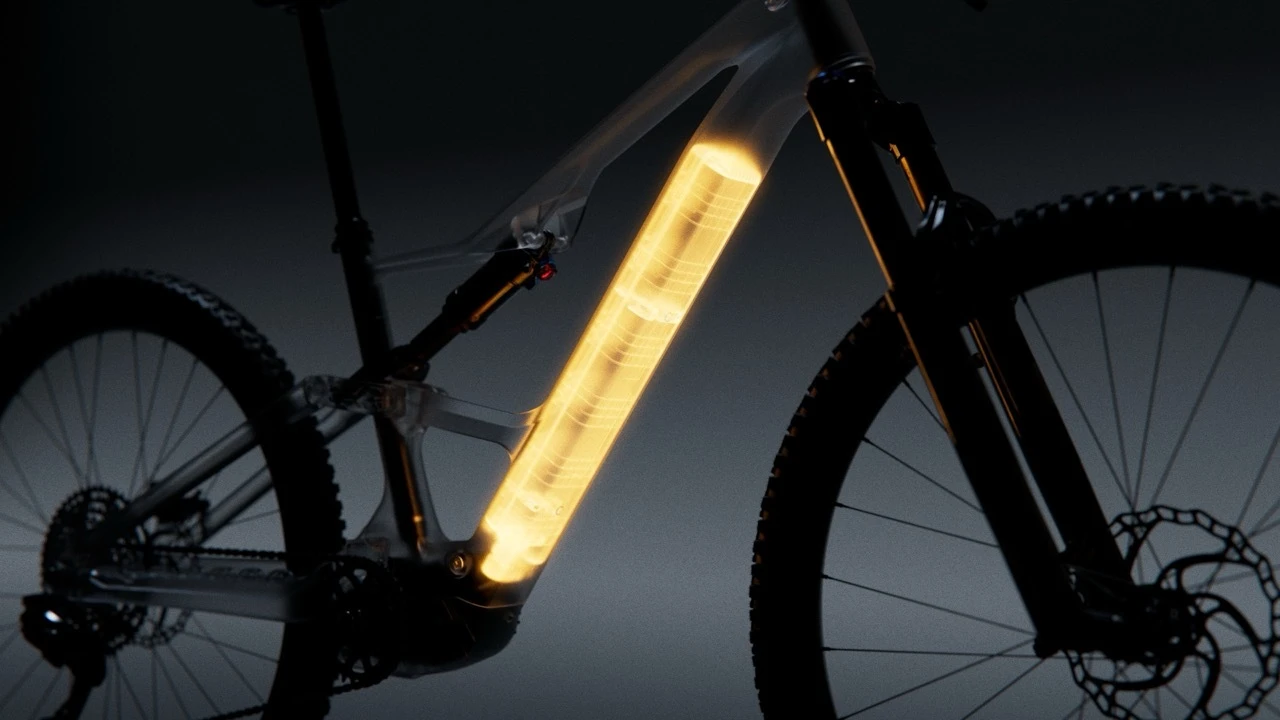
The 2027 Rise is offered with Orbea batteries in 420Wh and 630Wh capacities, with a 210Wh range extender available to add more energy for longer rides. That gives a maximum combined capacity of 840Wh. The 420Wh battery is listed at approximately 1.9kg, the 630Wh battery at 2.9kg and the range extender at 1kg.
Orbea’s presentation estimates around 1,500–1,800 metres of climbing from the 420Wh battery, 2,200–2,400 metres from the 630Wh battery and more than 3,000 metres with the 840Wh combination. These are manufacturer estimates, not guaranteed distances: rider weight, terrain, temperature, tyres, cadence and assistance level all affect real-world range.
The choice lets riders decide what matters most to them. The smaller battery keeps weight down for shorter rides and riders who want the most agile feel. The 630Wh option is better suited to longer days or riders who expect to use higher assistance more often. Adding the range extender offers a way to build in extra capacity when the route calls for it, without carrying the additional battery weight on every ride.
Orbea Rise 2027 - first impression review
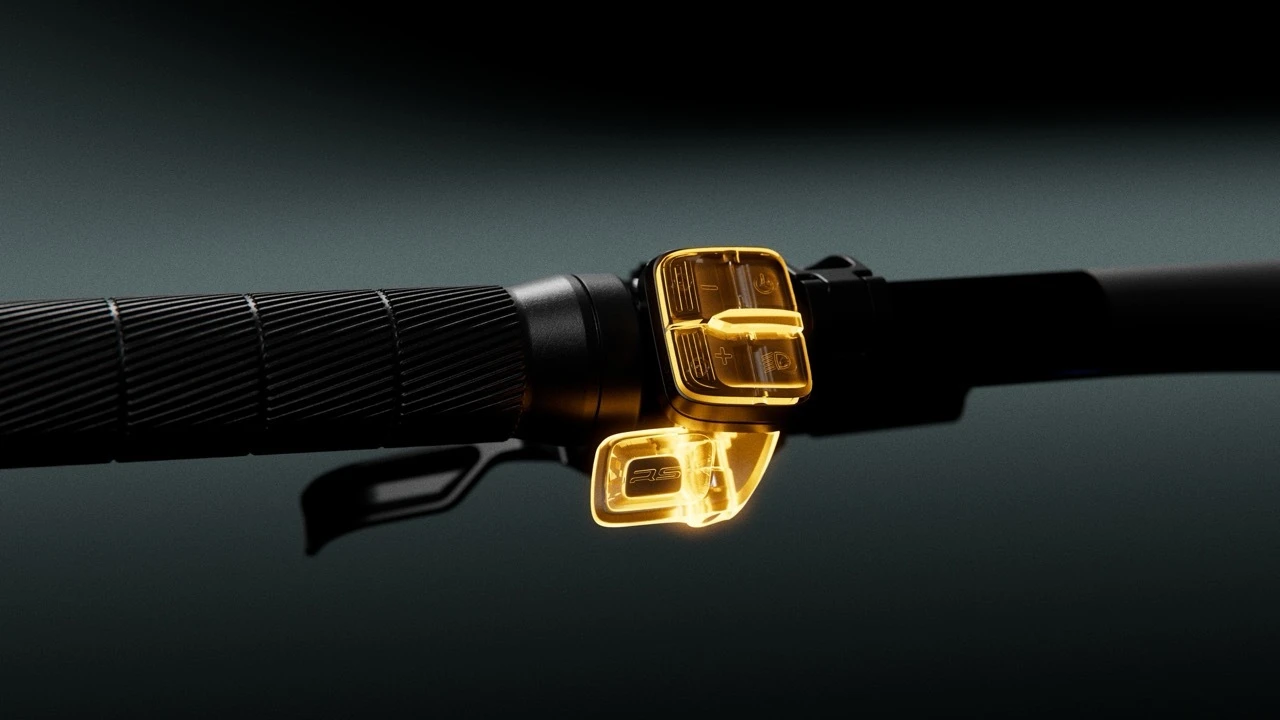
The new RS Control System is designed to put motor settings, ride information and smart dropper functions within reach through one compact handlebar control. Its display shows battery and motor information, and the system includes features such as Super Boost, mode selection, Stealth Mode and a full battery charge function. The aim is a cleaner cockpit with less time spent looking down at a separate display.
Selected builds can be equipped with Orbea’s MC10-RS smart dropper post. Its functions include push-to-drop, partial drop and a choice of smart or classic operation. The dropper and display are part of the wider integrated system and are powered from the main battery, reducing the need for separate batteries and controls.
It is a thoughtful direction for an eMTB cockpit. The more the bike can manage through a single, intuitive interface, the easier it is to keep attention on the trail. The smart dropper functions also have practical potential for riders who want quick, repeatable saddle movement on varied terrain.
Our first impressions
On paper, the 2027 Rise looks like a more versatile bike without abandoning the reason riders chose a Rise in the first place. The SL keeps the emphasis on efficient trail riding and quick handling. The LT adds travel, a more progressive suspension feel and a mullet option for riders who want to take on rougher, steeper terrain.
The new EP810 motor gives Orbea room to offer stronger assistance when needed, while RS tuning keeps the focus on how that power is delivered. Pair that with 420Wh and 630Wh battery choices, a range extender and a more integrated control system, and the Rise now appears better equipped to cover everything from short, lively rides to long days in the hills.
We are looking forward to spending time on both versions to see how the new motor tune, suspension and geometry work together on the trail. For now, the 2027 Rise looks like a meaningful evolution: more capable and more configurable, with the same clear goal of keeping the rider involved in the ride.
Buyers Guides
Compare models & explore the range
For a more granular breakdown, the individual product pages go into full detail on specifications and features, with the two bikes in the new Rise range listed below.
To compare all individual specs for each new 2027 Rise LT models click here
And to compare all individual specs for each new 2027 Rise SL models click here
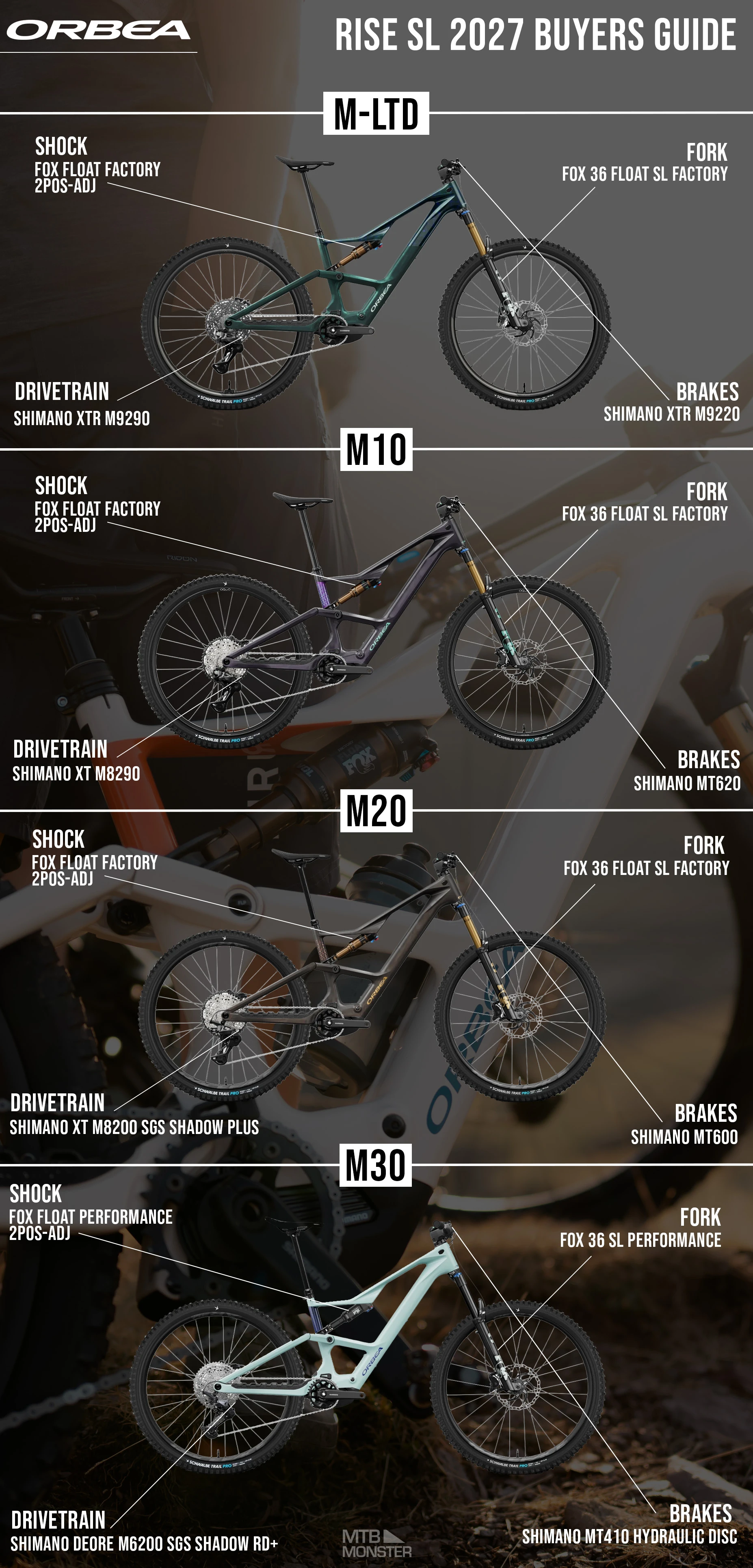
Rise SL buyers guide
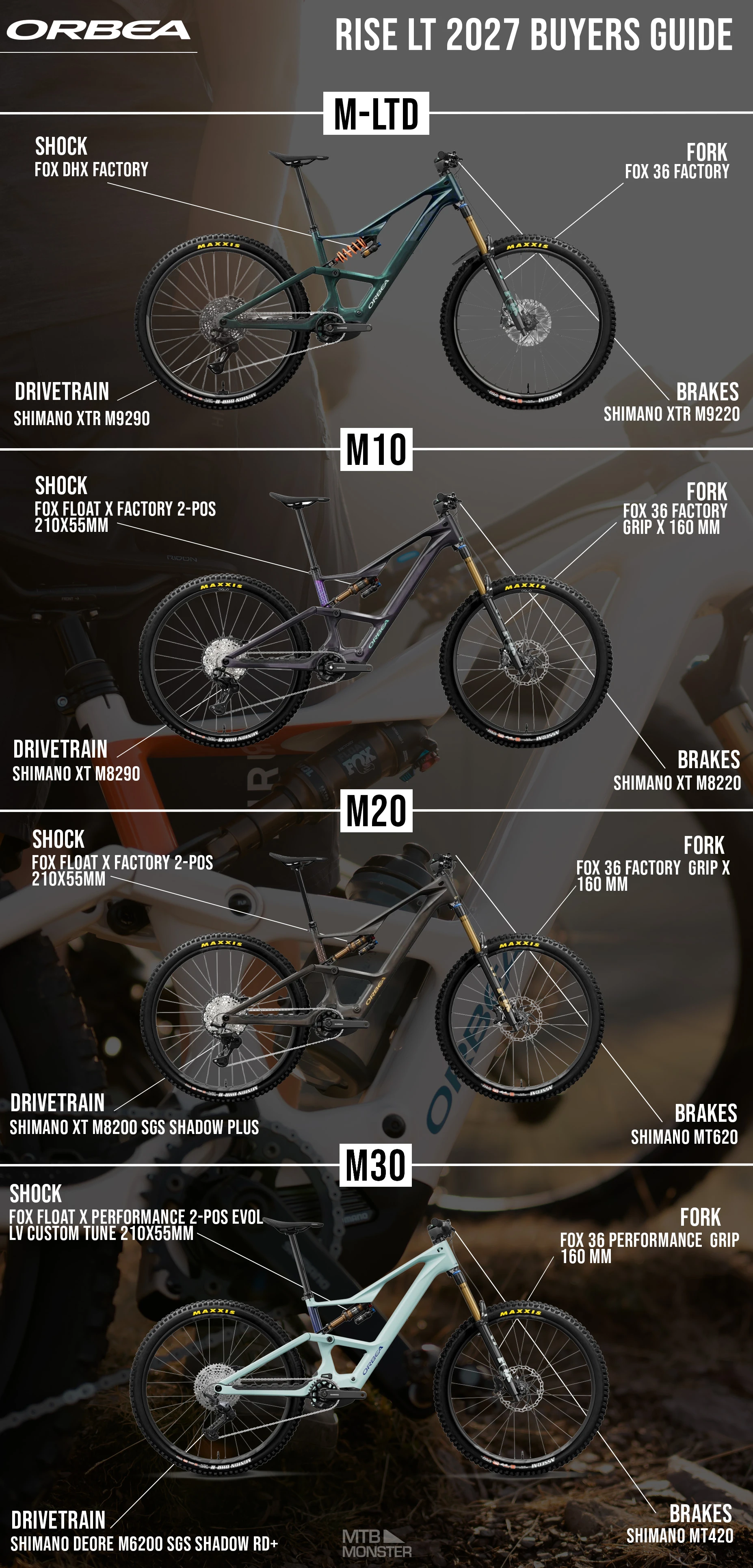
Orbea Rise LT buyers guides
Last updated - 05/11/26
Posted by Paul Hoyle on 5th Nov 2026
Need any further help in choosing your next bike? Drop us a line on 01254 959345, or alternatively fill out the form below. We'd be glad to help.