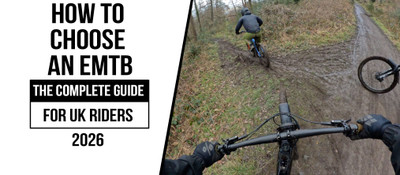
Terrain, travel, geometry, motors, batteries, extenders and frame types explained in one comprehensive guide.
INTRODUCTION: A CLEARER WAY TO CHOOSE AN eMTB
The modern eMTB market is filled with different models, travel numbers and motor systems, which can make the buying process feel complicated. A more structured way to approach it is to begin with the terrain you ride.
Terrain influences:
• the suspension travel that works best
• how stable the bike feels
• whether full suspension is beneficial
• the motor and battery capacity you may want
This guide explains a terrain first method grounded in real UK riding conditions. It is a straightforward system designed to help riders understand which bikes align with the ground they ride most.
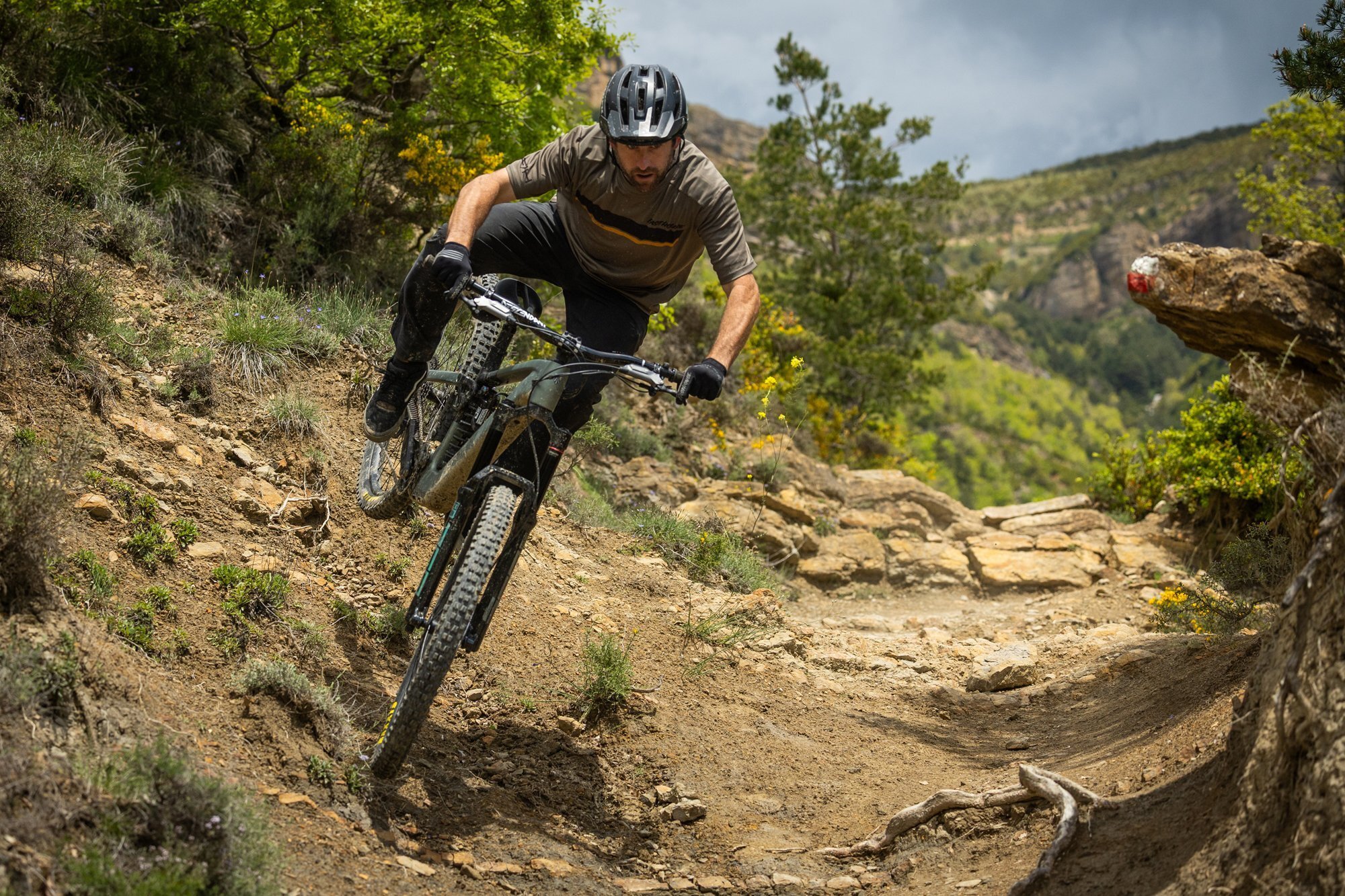
1. THE TERRAIN SCALE: WHAT IT REPRESENTS
The Terrain Scale groups UK riding into four logical categories, ranging from smooth to highly technical. It is not a list of restrictions. Riders frequently take bikes beyond their intended category, but the scale shows where each type performs at its best.
How the scale works
As you move from smoother terrain to more demanding terrain:
• ground surfaces become rougher
• impacts increase
• features become unavoidable
• braking traction becomes more important
• suspension depth contributes more to control
Terrain, not gradient alone, is the defining factor.

2 THE FOUR UK TERRAIN CATEGORIES
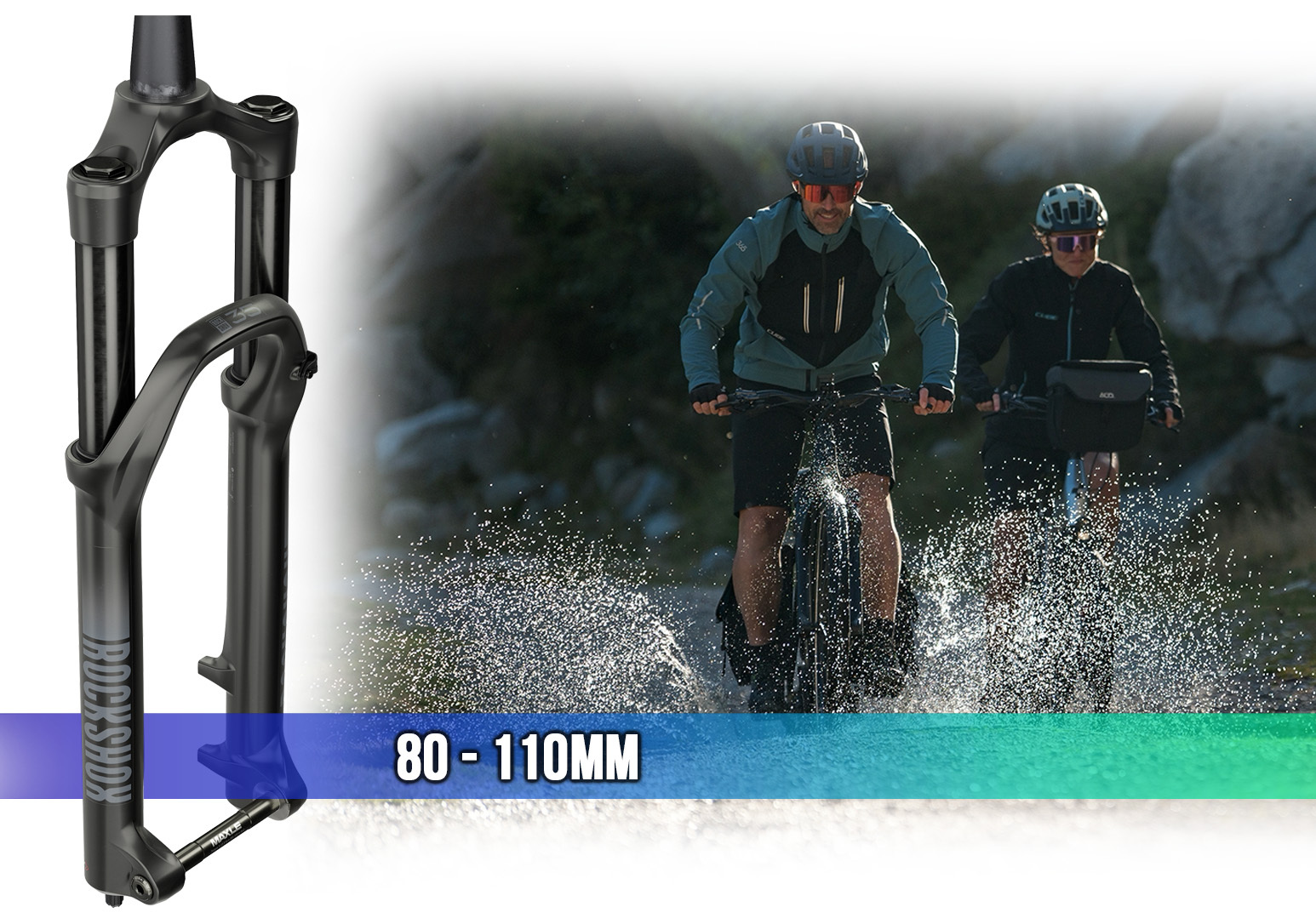
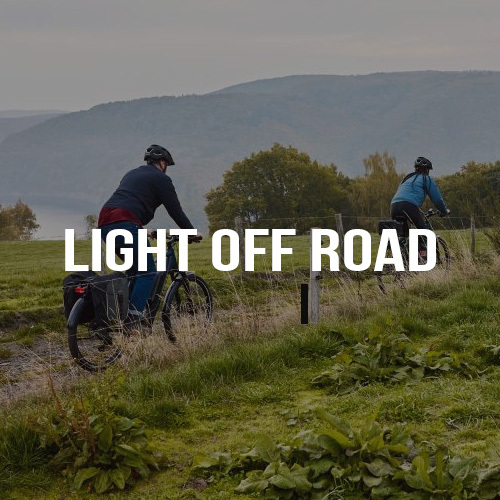
2.1. Light Off Road (80 to 110 mm)
Smooth terrain where features are minimal and predictable.
Examples:
• forest tracks
• canal paths
• cycle routes
• disused railway lines
• well maintained bridleways
This environment rewards efficiency. Shorter travel reduces vibration without unnecessary weight.
2.2. Off Road (120 to 130 mm)
Terrain begins to introduce small features, while still remaining manageable.
Examples:
• blue trail centre loops
• smooth singletrack
• mellow red sections
• rolling mixed terrain
Expect shallow roots, low rock steps and occasional compressions. This travel range balances efficiency with comfort and grip.

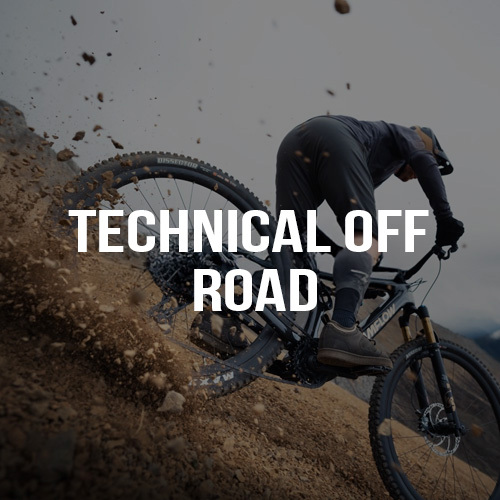
2.3. Technical Off Road (140 to 160 mm)
Terrain includes unavoidable natural or trail centre features that demand more support.
Examples:
• red and black trail centres
• natural routes with roots, rocks or off camber sections
• short technical climbs
• repeated uneven impacts
This is a common category for UK riders who explore a mix of trail centres and natural terrain.
140 mm is an efficient all rounder.
150 to 160 mm offers greater stability on unpredictable ground.

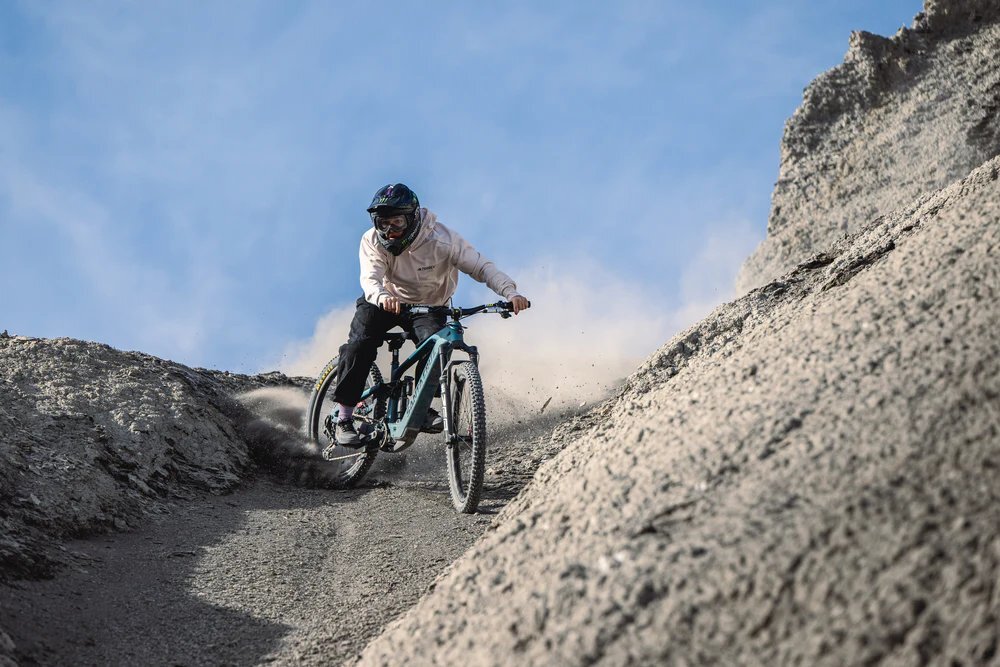
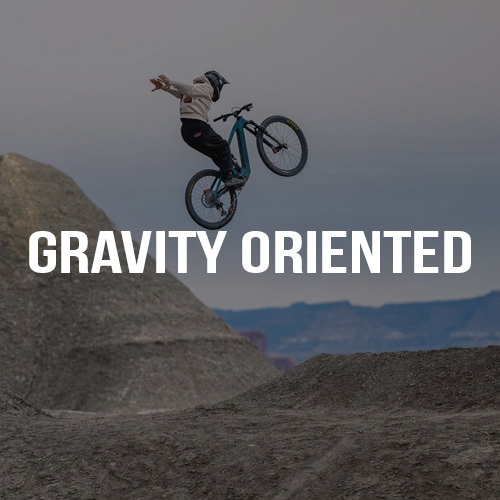
2.4. Gravity Oriented (170 to 180 mm and above)
Terrain where steepness and technical features work together.
Examples:
• natural chutes
• fall line descents
• rock slabs and ledges
• deeper ruts
• larger drops
• big compressions
These environments create higher forces that require more suspension depth for traction, stability and control.

SUSPENSION TRAVEL - HARDTAIL & FULL SUSPENSION
3. HOW SUSPENSION TRAVEL RELATES TO TERRAIN
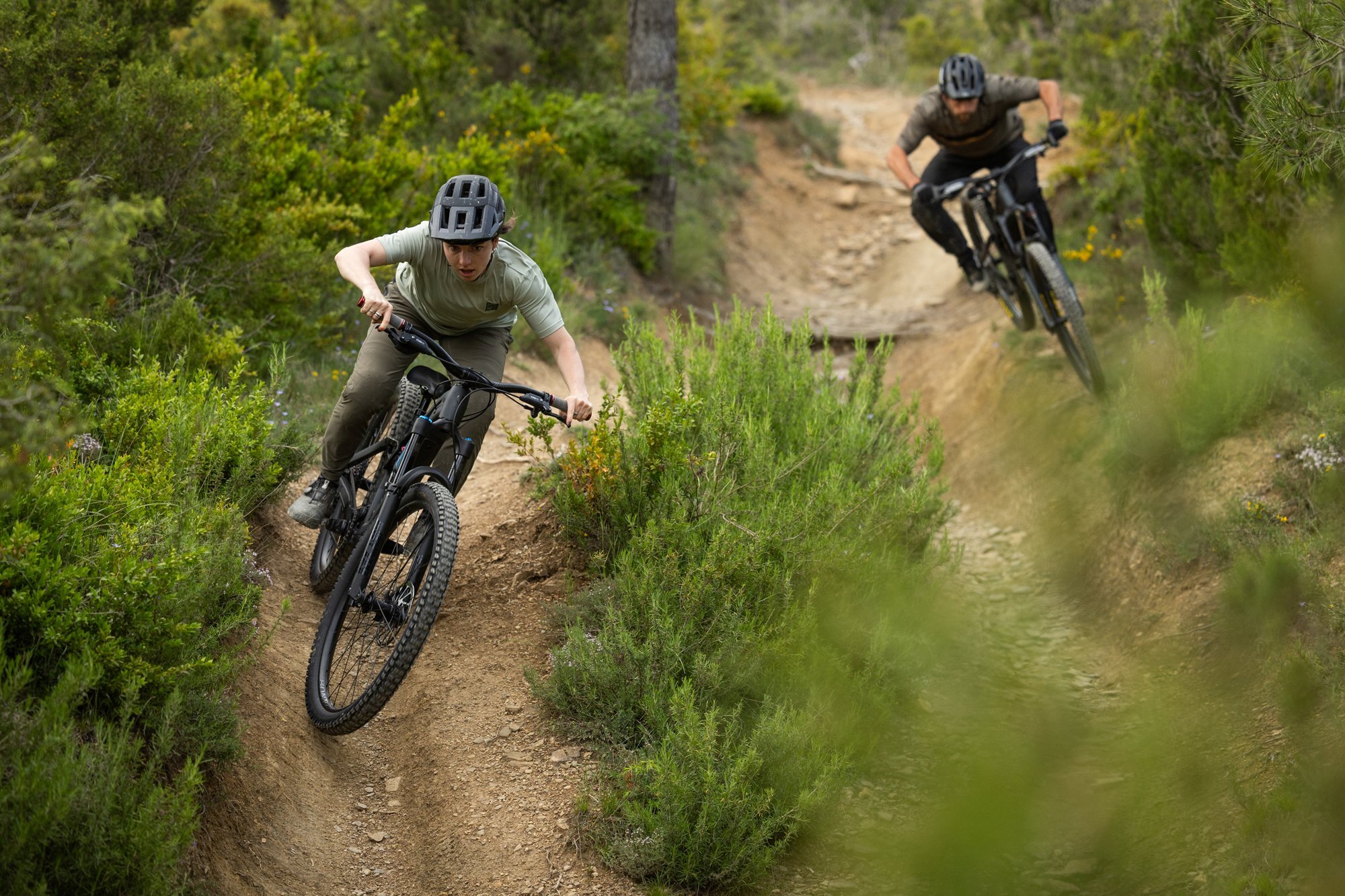
Suspension travel represents the amount of force a bike is designed to absorb. As terrain becomes rougher, travel plays a more significant role in keeping the rider balanced and maintaining traction.
Suspension needs to:
• maintain braking traction
• absorb repeated or irregular impacts
• prevent pitching
• allow the wheels to track uneven surfaces
• offer reserve travel for unexpected hits
Shorter travel suits smoother terrain.
Longer travel suits rougher, unpredictable terrain.
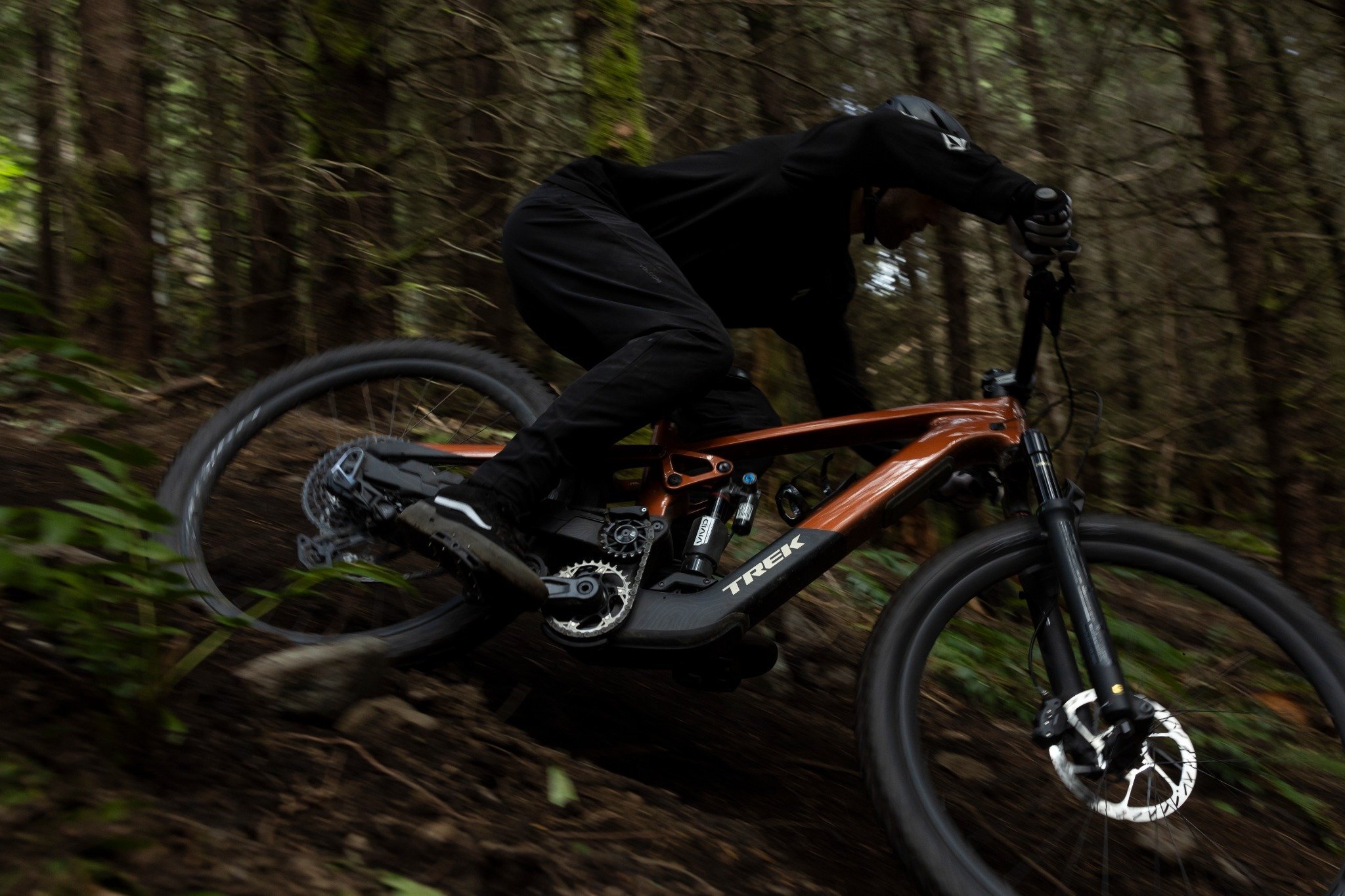
4. CAPABILITY, CONFIDENCE AND THE POSSIBILITY OF BEING OVERBIKED
How more travel affects capability
More suspension generally increases stability on rough surfaces, improves comfort and helps the bike stay composed in technical sections.
Understanding when more travel is not necessary
If your riding does not involve steep natural features or larger technical obstacles, the extra travel of gravity bikes can feel unnecessary. Heavier components and deeper suspension can reduce responsiveness on moderate trails.
The UK midpoint
For many UK riders, especially those riding a mixture of trail centres and natural terrain, around 160 mm has become a practical and versatile travel range.
5. HARDTAIL VS FULL SUSPENSION
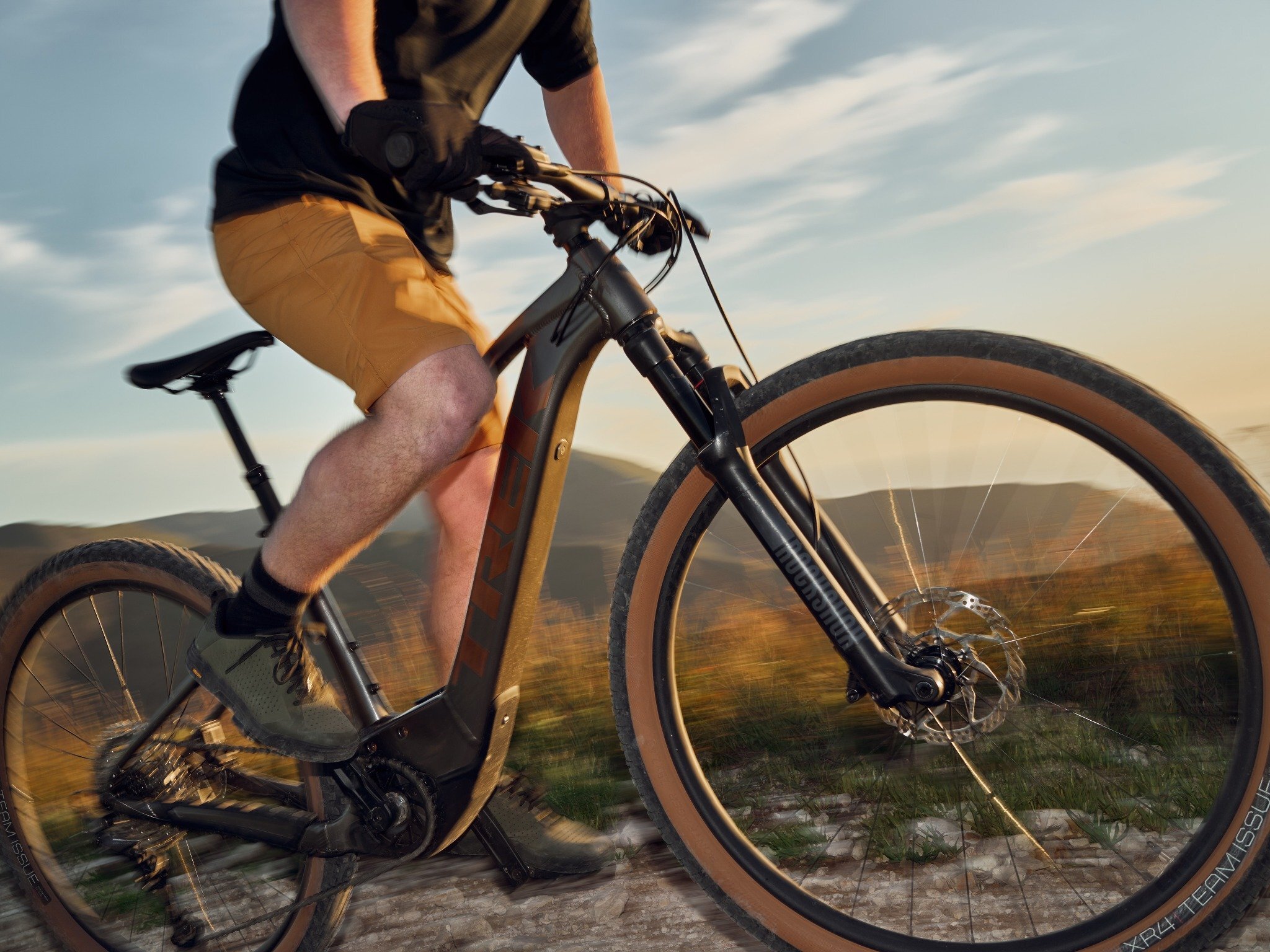
Hardtail eMTBs
Best suited to predictable terrain such as:
• bridleways
• cycle paths
• light XC singletrack
Advantages include lighter overall weight, simplicity and efficient pedalling.
Hardtails become less stable as terrain becomes rougher or more irregular.
Full Suspension eMTBs
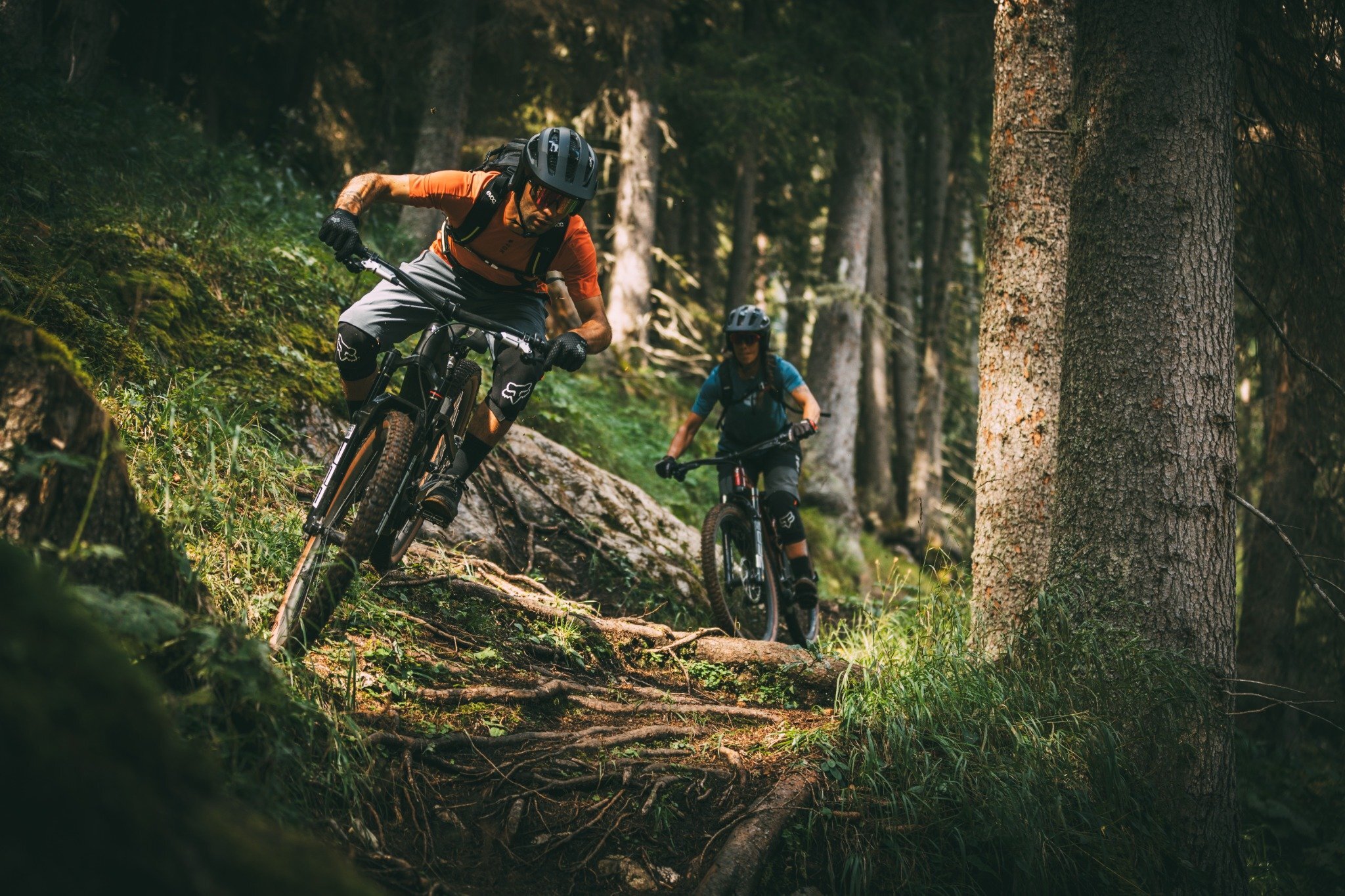
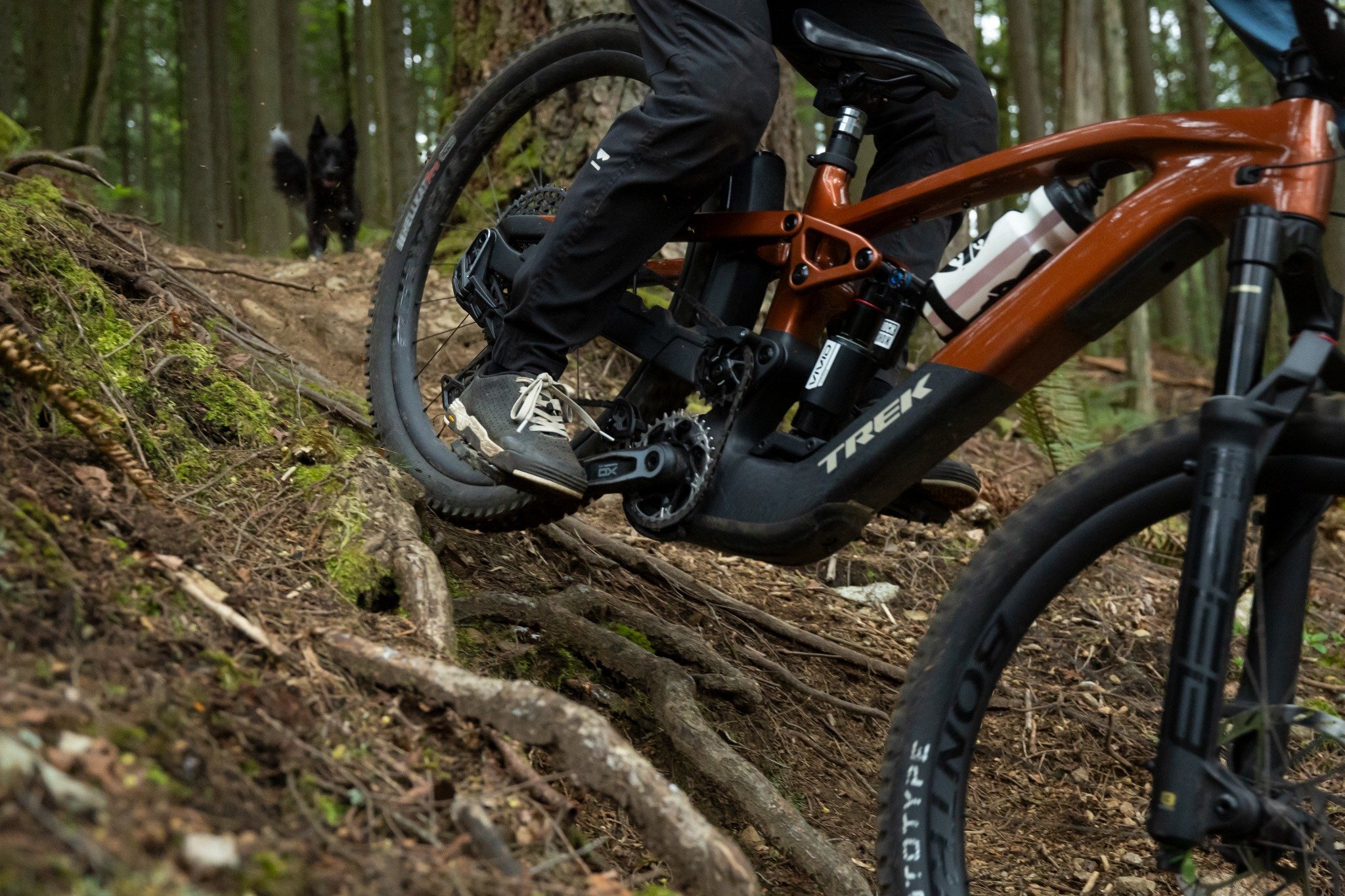
Best suited to terrain that includes roots, rocks, cambers and uneven surfaces.
Advantages include:
• improved comfort
• smoother braking
• increased traction
• reduced rider fatigue
• more control in technical features
Full suspension offers benefits for a wide range of riders, not only those seeking aggressive terrain.
MOTORS, BATTERIES & RANGE EXTENDERS
6. eMTB MOTORS AND BATTERIES
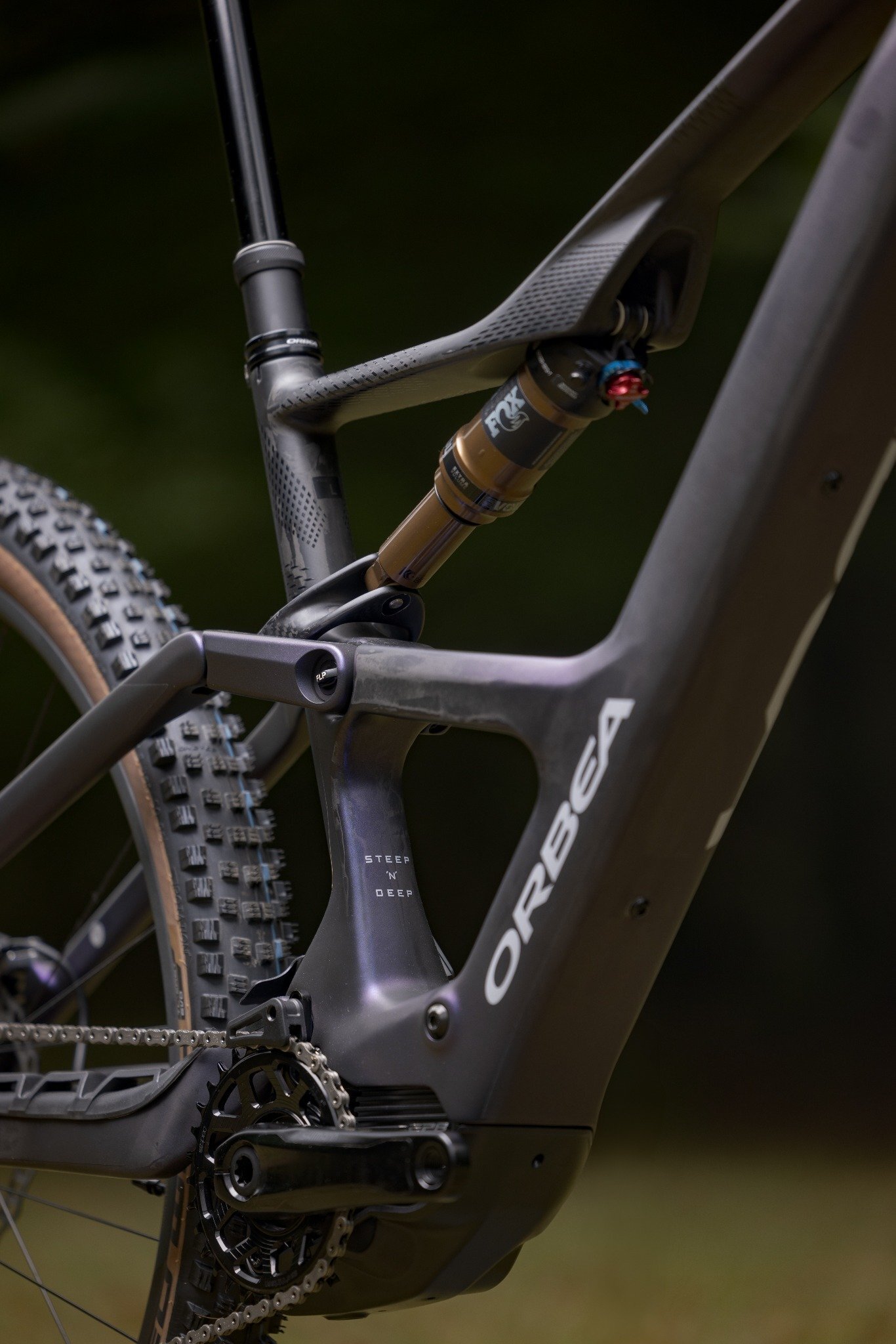
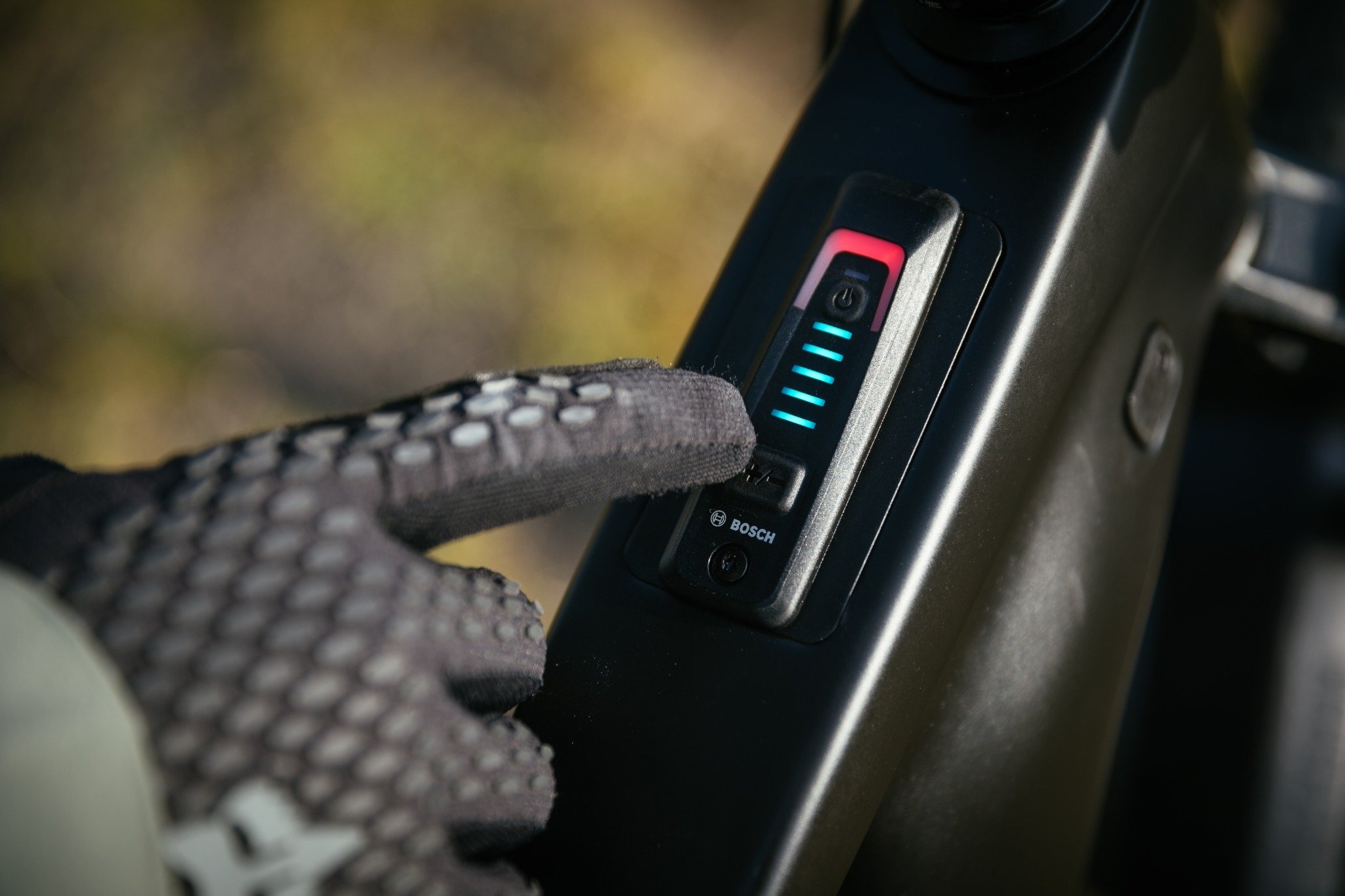
Battery capacity determines range, while motor torque determines the level of assistance available under load.
Range varies based on:
• rider weight
• elevation
• terrain
• rolling resistance
• temperature
• assist mode
• cadence
• tyre choice
The Bosch eBike Range Assistant provides realistic estimates for planning.
Group riding considerations
If your battery capacity is significantly lower than your group’s capacity, you may need to use lower assist levels to complete the ride together.
Batteries of 600 Wh or more help maintain consistent pacing.
Short distance rides
For rides around 8 to 12 miles, the heaviest batteries can add unnecessary weight.
Smaller or mid size batteries can make the bike feel more agile and efficient for shorter loops.
7. RANGE EXTENDERS: HOW THEY WORK AND HOW THEY MOUNT
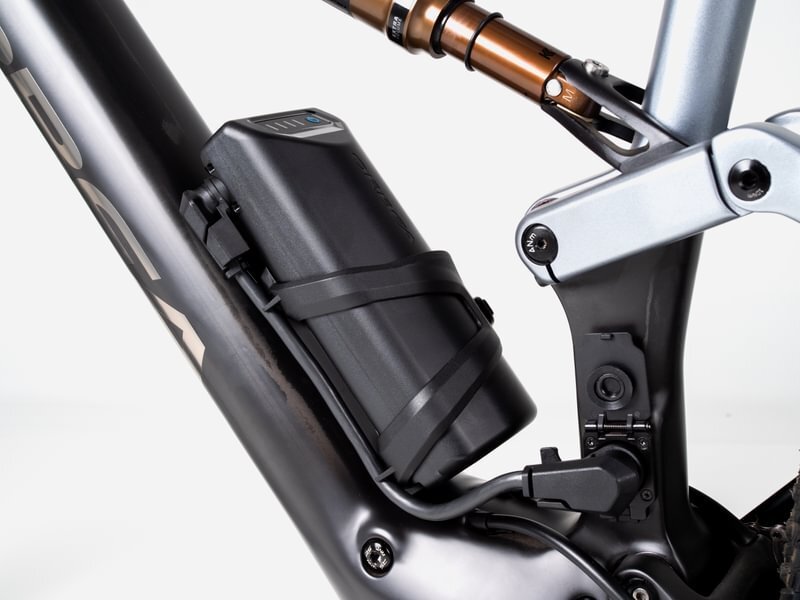
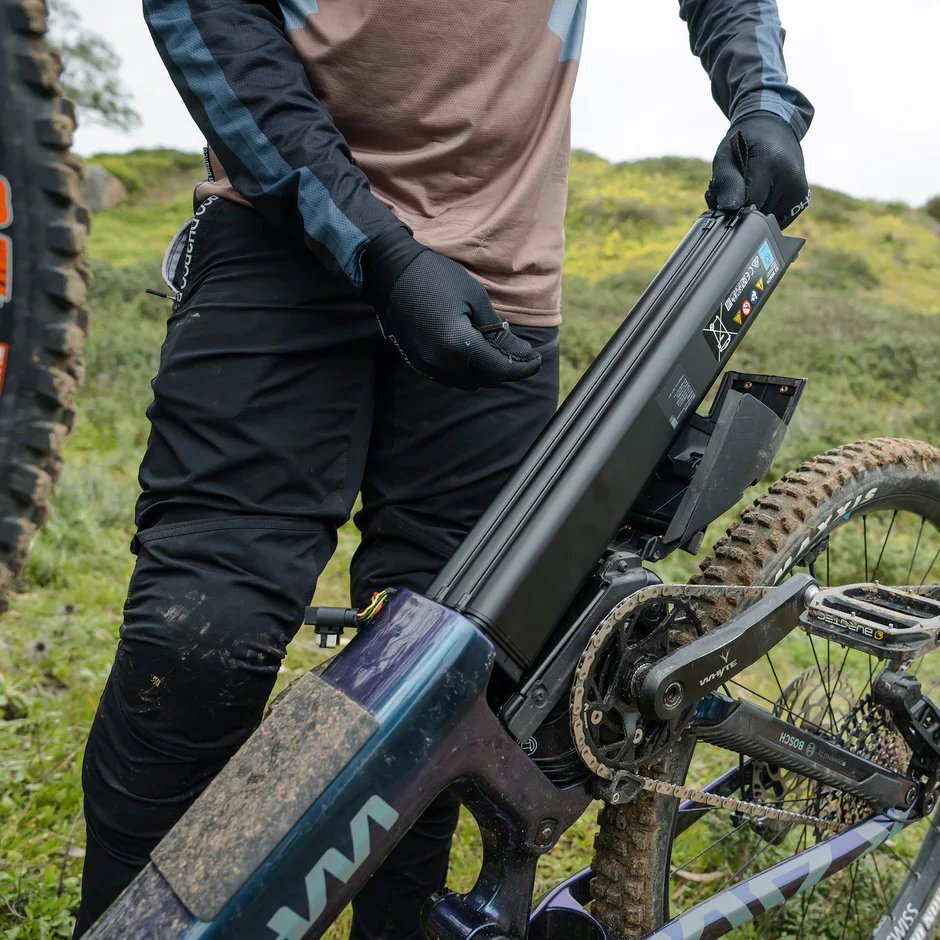
Range extenders are compact auxiliary batteries that increase capacity without requiring a larger internal battery.
Mounting method
Most extenders mount directly into the bottle cage position, either:
• bolted directly to the bottle bosses
• or attached using a supplied adaptor plate
This makes them easy to fit or remove, and compatible with most frames.
Why riders use them
Range extenders allow riders to:
• ride light on short loops
• add extra capacity for longer days or higher elevation rides
• match pacing with groups
• avoid committing to a permanently heavier battery
How they discharge
Depending on the manufacturer, the bike will either:
• draw power from the extender first
or
• discharge both batteries in a balanced pattern
Both approaches protect battery health and maintain consistent assistance.
8. LIGHTWEIGHT VS FULL POWER SYSTEMS
Lightweight systems
• lower torque
• smaller batteries
• reduced bike weight
• more natural ride feel
Full power systems
• higher torque
• larger batteries
• strong support on steep or sustained climbs
New blended systems
Modern systems, including Avinox, combine high torque with lower overall weight and larger capacity, narrowing the gap between traditional categories.
What to choose
Choose the system that best aligns with your typical terrain, ride distance and preferred level of assistance.
FILTERING SYSTEM AND CONCLUSION
9. THE COMPLETE eMTB FILTERING SYSTEM
A terrain first approach allows you to filter bikes methodically:
Step 1: Hardtail or full suspension
Smooth terrain supports a hardtail.
Mixed or technical terrain benefits from full suspension.
Step 2: Choose your travel
80 to 110 mm for smooth terrain
120 to 130 mm for well maintained bridleways
140 to 160 mm for technical UK all round riding
170 to 180 mm for gravity terrain
Step 3: Choose your motor
Lightweight for agility and natural feel
Full power for steep terrain and longer climbs
Step 4: Choose your battery
Shorter rides support smaller batteries
Longer rides or group pacing benefit from larger batteries or range extenders
Step 5: Apply the filters
Use these criteria to narrow your shortlist on MTB Monster.
CONCLUSION
Selecting an eMTB becomes clearer when you start with the terrain you ride.
Terrain influences travel, frame type, motor support and battery capacity, and highlights whether a range extender would be useful.
This structured approach helps identify the bikes best suited to your riding environment.
If you would like assistance choosing an eMTB, contact MTB Monster or visit the showroom.
Always confirm terrain suitability with the manufacturer for specific models.

Need any further help in choosing your next bike? Drop us a line on 01254 959345, or alternatively fill out the form below. We'd be glad to help.
Posted by Paul Hoyle on 16th Dec 2025